This article is for shops that use Tekmetric Payments powered by Stripe.
What is a Dispute?
A dispute is a formal challenge a customer raises through their bank or payment provider against a charge from a shop.
Most disputes take the form of a chargeback — where the customer's bank, also known as the issuing bank, collects the disputed amount at the time they initiate the dispute. Some disputes, however, begin as an inquiry, where the bank requests more information about a charge before deciding whether to escalate. Responding promptly to an inquiry is your best chance to resolve the issue before it becomes a chargeback.
The Dispute Process
While the process varies slightly across different networks (Visa, MC, Discover, Amex, Affirm, Sunbit, Klarna, etc), this is the typical dispute sequence of events:

You now have a decision to make on how you want to proceed:
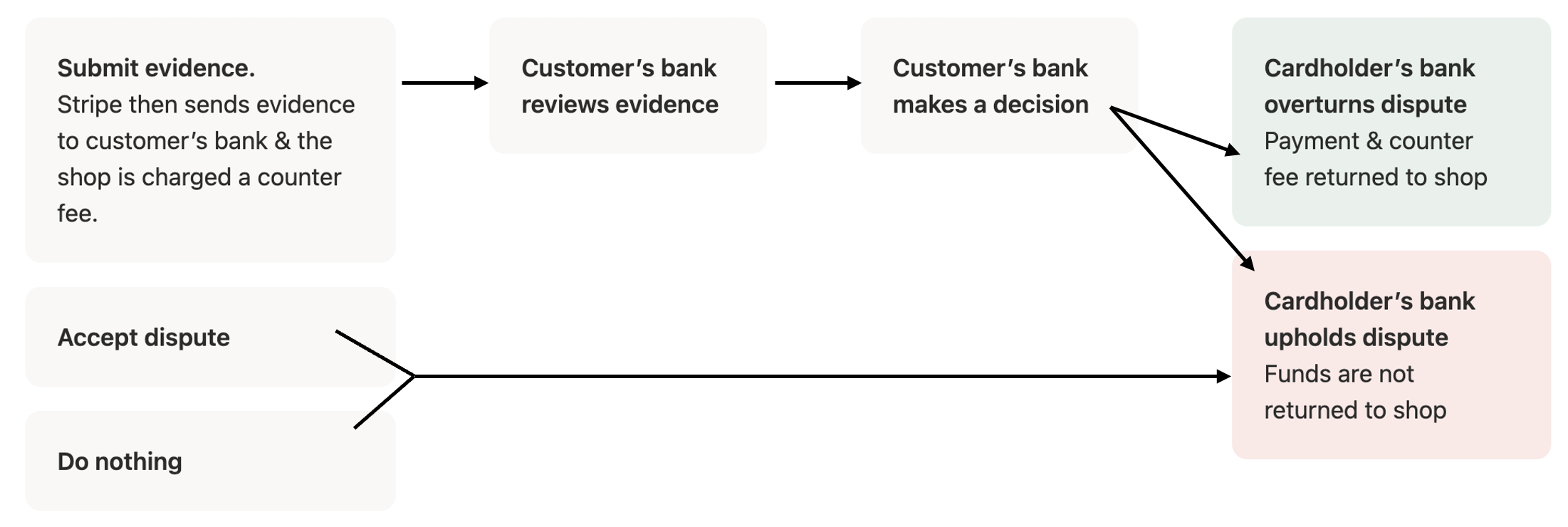
It is still recommended to submit evidence if the customer promises to withdraw the dispute, as there's no guarantee the customer's bank will retract the dispute.
Responsible Parties
Understanding each party's role prevents confusion and wasted effort:
| Party |
Role in Dispute |
What They Control |
| Your Shop |
Submits evidence — you are the only one with direct knowledge of repairs, conversations, and agreements |
Evidence quality & completeness |
| Tekmetric Payments |
If you reach out to us, we can help you with the rebuttal statement and explain what to include in your evidence submission. |
General dispute guidance |
| Stripe |
Packages and forwards your evidence to the card network / issuing bank. Stripe does not decide the outcome. |
Forwarding evidence to bank |
| Customer's Bank (Issuing Bank) |
The final decision-maker. Reviews evidence and rules in favor of the shop or the cardholder. |
Final dispute outcome |
Important: We generally do not respond to disputes on your behalf, as your shop has direct knowledge of the repairs performed, customer conversations, and agreements made. However, we are happy to help with your rebuttal statements and advise on what evidence to submit --reach out to us as soon as you are able so that you don't miss the deadline!
Dispute Reason Categories & Requirements
Most shops' disputes fall into one of the three Stripe dispute reason categories below.
| Reason Category |
What the Reason Claims |
What You Have to Prove |
| Fraud |
"I did not authorize this charge" |
The legitimate cardholder—or an authorized representative (such as an employee or family member)—did in fact make the payment |
| Product not received |
"I never received the service(s), parts, or tires I paid for" |
The service(s)/parts were in fact delivered or are not expected to have been delivered yet (for example, the agreed-upon delivery date is still in the future) |
| Product unacceptable |
"The work is unacceptable or not completed" |
- That the product or service was accurately represented before payment
- That the product wasn’t damaged or defective (if applicable)
|
Shops must provide specific proof to counter the customer's claims per the rules set forth by the card brands. See Stripe's Dispute Reason Categories for a full list of reasons and what evidence is required to overturn.
How Banks Review Disputes
The customer is the bank’s customer—not your business. If you and the customer disagree about a transaction, the bank generally won’t take the financial loss on your behalf. From the bank’s perspective, the payment was made for your goods or services, so disputes over refunds, cancellations, or services provided are generally between you and your customer.
Evidence can only be submitted online — no phone calls decide disputes — and banks frequently use automated review systems. A disorganized, emotional, or incomplete submission often results in an automatic loss before a human reviewer ever sees your case.
Keep all submissions:
- Short and factual — one clear statement per point
- Organized — present events in chronological order
- Professional — no emotional language or accusations
How to Respond to Disputes
What should you do now that you've received a dispute?
-
Review the response due date. A response cannot be submitted after this date, and Buy Now, Pay Later providers (e.g., Affirm, Sunbit, Klarna) often have short windows.
-
Always reach out to your customer when you receive a dispute: Attempt to reach out by email or text first so that you have documented communication. Ask for clarification about the dispute and remind them of your warranty and/or refund policy. If the customer does not respond, include that information in your dispute response.
-
Focus on the specific reason for the dispute. Only collect and submit evidence that directly supports your response to the customer’s claim.
-
Remember that you only have one chance to respond! Stripe immediately forwards your response and all supporting files to the issuing bank. You can’t edit the response or submit additional files, so make sure you’ve assembled all your evidence before you submit.
|
Clean process = easy wins
Messy, unorganized, or incomplete process = guaranteed losses
|
Write Your Response Statement
Banks reward professionalism. A calm, factual, document-supported statement is your strongest tool.
| What you want to say: |
What you should write instead: |
| "The customer is lying and trying to scam us. We did the work, and this is completely unfair." |
"The cardholder authorized the repairs on [date] with a signed work order, was notified of completion on [date], and picked up the vehicle on [date]. Supporting documentation is attached." |
Select the Right Product Type
You will be prompted to classify the transaction when you counter. The product type you select significantly affects how your evidence is evaluated by the bank.
Offline Service: This will be your default selection for most shops. Use this in these cases:
- Labor only (oil change, brake service, alignment, etc.)
- Labor + parts installed on-site
- Diagnostic fees
- Detailing or reconditioning services
- Any service performed in your shop
Physical Product: Select this if tangible goods were either purchased in your shop or shipped to the recipient. Your evidence should prove the customer has the item(s). Examples:
- Parts were shipped directly to the customer
- Tires or parts were ordered and then handed to the customer without any services completed
Select "Offline Service" for all auto repair transactions — including jobs that involve parts, as long as those parts were installed at your shop.
Collect Evidence
See the list below of evidence you should always include:
- Signed estimate/work order
- Signed invoice or receipt
- Your Terms & Conditions and Refund Policy — the signed version
- Customer email or text communication logs — audio and video files are not allowed
- Proof the vehicle was picked up, or the service was completed
- Matching customer information — ID, phone, email on file
- Photos where relevant — before/after, VIN plate, completed work
And keep in mind:
-
More evidence does not always mean a stronger case. Unrelated or excessive documentation can make it harder to identify the evidence that actually matters.
-
Ask yourself: Does this evidence directly address the customer’s claim? If not, leave it out.
-
Keep your evidence clear and organized. Avoid long explanations or emotional statements. Banks make decisions based on documentation and evidence.
Evidence Submission Checklist
- Organize each piece of evidence in chronological order of events and according to the evidence type it satisfies—be as concise as possible.
- Combine items of the same evidence type into a single file.
- Clearly label each file (e.g., "01_SignedEstimate.pdf")
- Limit your evidence file size to the combined maximum of 4.5 MB.
- Limit your Mastercard evidence file length to the combined maximum of 19 pages.
- Banks evaluating the dispute won’t review any external content, so don’t include:
Check the Dispute Status
Per Stripe:
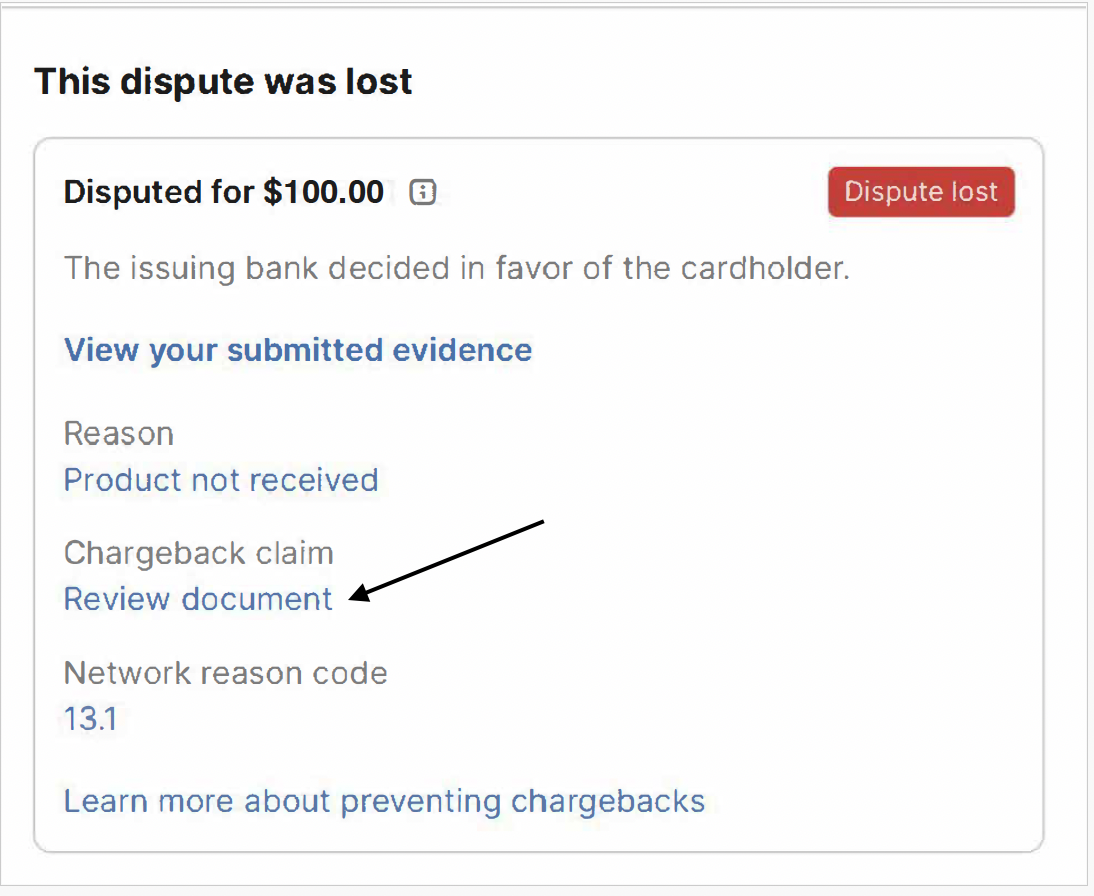
After you submit a response, the status of the dispute changes to under review. When the issuer informs Stripe of its decision, we inform you of the outcome by email and by updating the dispute status to one of the following:
-
won: Indicates that the bank decided in your favor and overturned the dispute. In this case, the issuing bank returns the debited chargeback amount to Stripe, and Stripe passes this amount back to you.
-
lost: Indicates that the bank decided in the account owner’s favor and upheld the dispute. In this case, the refund is permanent, and the dispute fee isn’t returned.
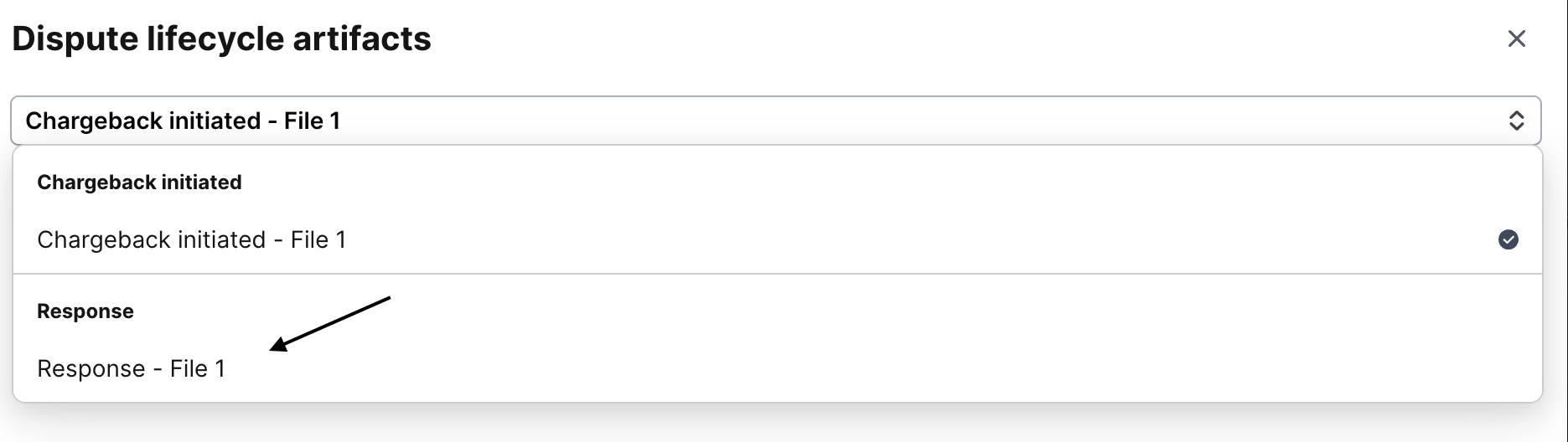
In some cases, the bank provides additional details about the dispute decision.
Dispute Prevention
Chargeback protection happens BEFORE the payment — not after.
At the Counter (Card-Present Transactions)
- Always insert or tap the card with the customer physically present
- Never manually key in cards while the customer is watching or on the customer's behalf due to the payment link not working
- Match the customer's Driver's License name to the name on the card
- Obtain a signature on both the estimate and the final invoice
- If multiple cards are being used or multiple declines registered, STOP
Required Paperwork — Every Job
Every Estimate should include a signed acknowledgment of:
- Terms & Conditions
- Refund Policy
- Authorized scope of repairs
- Final amount and payment approval
Signature methods:
Tablet signature ✔ Accepted
Printed signature ✔ Accepted
No signature at all ⚠ High risk
Customer Information — Always Collect
- Legal first and last name
- Phone number
- Email address
- Billing address
- Driver's license number
If you receive a dispute, the more verified contact data you have on file, the more credibility your evidence carries with the bank.
High-Risk Situations — Require Alternative Payment
Require a money order, cashier's check, or cash instead of a card when you observe any of the following:
- High-dollar repair with multiple declines across multiple cards
- High- dollar repairs for first-time customers wanting to use text-to-pay
- Billing zip code does not match the card's zip code
- Customer contact information appears fabricated or unverifiable
- Customer wants to split payment across several different cards
- Customer is paying before the vehicle or product has been inspected
Example(s):
- A customer calls to order tires over the phone and pays by card before arriving for installation.
- A customer calls to order a DCR Conversion kit and wants it shipped to them — do not ship an item to a customer you are not familiar with.
Communication Protects You
Every meaningful interaction should be documented in writing since audio and video files cannot be submitted as evidence when countering a dispute.
Always document the following in email or your shop management system:
- Repair authorizations
- Status updates and estimated completion dates
- Delays and the reason for them
- Completion and vehicle-ready notifications
If you take payment before a job is complete, send the customer a written confirmation of the expected completion date. This single step prevents a large percentage of "service not received" disputes.
Stripe Resources
Use the following Stripe documentation to guide your submissions: